The Role of Dreams in Ancient Mythology and Folklore: Visions, Omens, and Divine Messages
Long before alarm clocks and sleep trackers, humans lay in the dark and wondered what their dreams meant. Not as curiosities — as instructions. Across every ancient civilization we know of, dreams were treated as a channel, a crack in the wall between the waking world and something larger. Gods spoke through them. Ancestors warned through them. Fate arrived in them, unbidden, at the edge of sleep.
Understanding how ancient peoples engaged with dreams isn't just an exercise in history. It reveals something about why we still feel, even now, that certain dreams mean something.
Dreams as Sacred Communication in the Ancient World
Ancient cultures across every continent treated dreams as direct messages from gods, spirits, or ancestors — not as random mental noise. This belief wasn't superstition in the dismissive sense. It was a logical conclusion drawn from the experience of dreaming itself: during sleep, something happens that feels realer than ordinary thought, something that arrives without being summoned.
In Mesopotamia, Egypt, Greece, and beyond, this experience was interpreted through the lens of the sacred. Dreams could reveal the will of the divine, foretell disaster, diagnose illness, or guide a king's military decisions. The Assyrian king Ashurbanipal recorded dreams in royal annals alongside battle victories. The pharaohs of Egypt treated certain dreams as direct decrees from the gods.
What made this framework powerful was its universality. The poor farmer and the emperor both dreamed. Both could receive a vision. That democratic quality — the idea that the divine could reach anyone through sleep — gave dreams an authority that crossed social boundaries in ways few other spiritual experiences could.
Greek and Roman Dream Mythology — Morpheus, Hypnos, and the Gates of Horn and Ivory
Greek mythology developed one of the most elaborate dream cosmologies in the ancient world. Morpheus, the god of dreams, was the son of Hypnos (sleep) and the grandson of Nyx (night). His name is the root of the word "morphine" — a fitting legacy for a deity who shaped the visions that visited sleeping minds.
Morpheus had a specific role: he appeared in dreams in human form, delivering messages from the gods. His brothers Phobetor and Phantasos took the forms of animals and inanimate objects respectively, together composing the Oneiroi — the collective spirits of dreams who flew out each night from their cave near the underworld.
Homer's Odyssey introduced one of the most enduring images in dream lore: the two gates through which dreams travel to the sleeping world. Dreams that pass through the Gate of Horn are true and prophetic. Dreams from the Gate of Ivory are deceptive, beautiful but false. This distinction — between meaningful and meaningless dreams — was one the Greeks took seriously, and it shaped how they approached dream interpretation for centuries.
Roman tradition absorbed much of this framework. The god Somnus (their version of Hypnos) and the figure of Morpheus appear in Ovid's Metamorphoses, reinforcing the idea that the dream world was populated by real entities with intentions toward the dreamer.
Egyptian and Mesopotamian Dream Traditions
Egyptian and Mesopotamian cultures produced the earliest written records of systematic dream interpretation, treating dreams as omens that required trained specialists to decode. The Egyptians had professional dream interpreters — priests who consulted Egyptian dream books, papyrus texts cataloguing hundreds of dream images alongside their meanings. The Chester Beatty Papyrus, dating to around 1275 BCE, is among the oldest surviving examples: it lists dreams and their interpretations in a structured format that looks remarkably like a reference manual.
In Mesopotamia, the tradition runs even deeper. The Epic of Gilgamesh — one of the oldest surviving works of literature — contains some of the earliest recorded dream narratives in human history. Gilgamesh dreams of a meteor falling from the sky and of an axe that he embraces like a wife. His mother Ninsun interprets both dreams as prophetic announcements of the hero Enkidu's arrival. Dreams here aren't just atmospheric detail; they drive the plot and reveal divine intention.
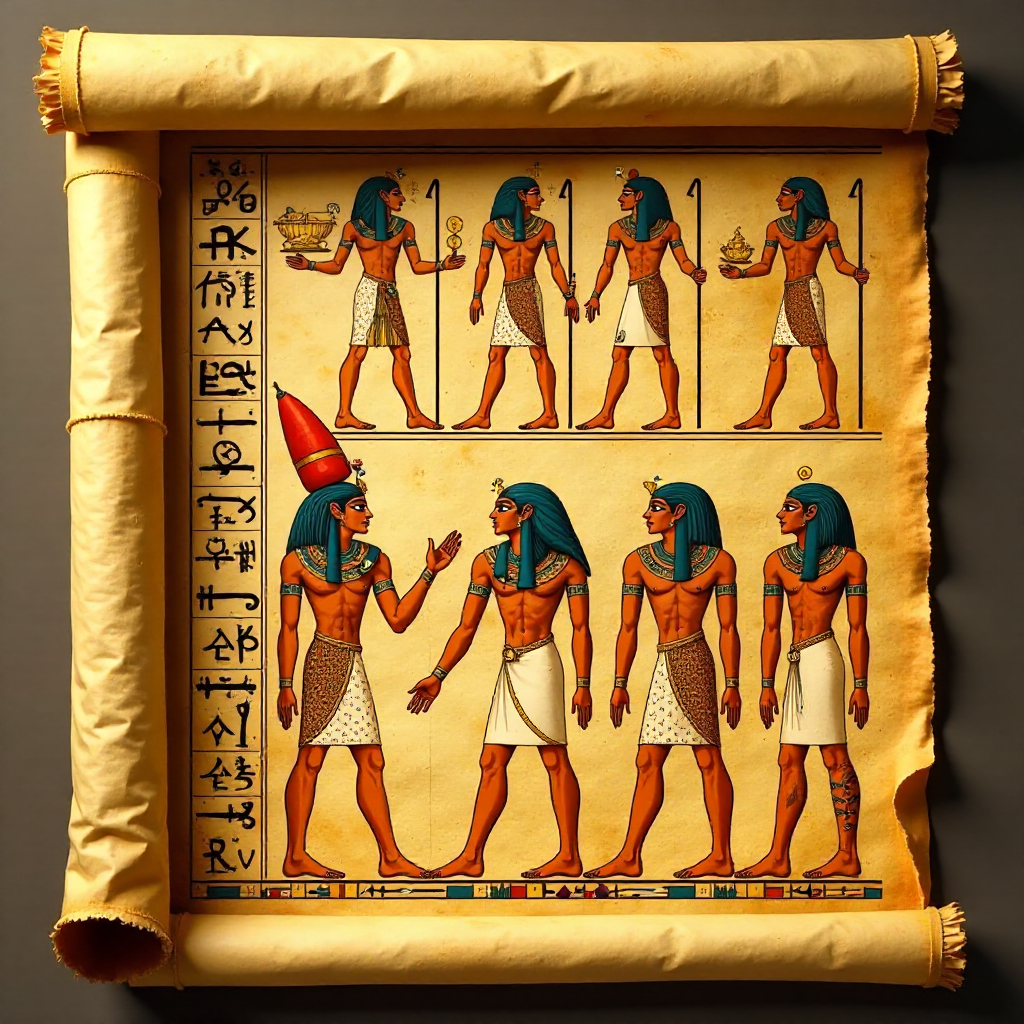
Oneiromancy — the formal practice of divination through dream interpretation — was a respected discipline in both cultures. In Assyria and Babylon, dream interpreters held positions at court. Their work involved not just reading symbols but understanding context: who dreamed, when, under what circumstances, and what the dreamer ate the night before could all affect the reading.
Incubation Rituals — Sleeping in Sacred Spaces to Receive Visions
Incubation rituals were the ancient practice of sleeping in a sacred location — a temple, a shrine, a burial site — specifically to receive a divine dream. The word comes from the Latin incubare, meaning "to lie upon," and the practice appeared across Greek, Egyptian, Mesopotamian, and later Roman traditions.
The most famous sites were the Asclepion sanctuaries dedicated to Asclepius, the Greek god of medicine. Pilgrims who arrived at these healing temples would undergo purification rituals — fasting, bathing, prayer — before sleeping in a special hall called the enkoimeterion. The expectation was that Asclepius himself would appear in the dream and either heal the supplicant directly or prescribe a treatment through symbolic imagery.
This wasn't fringe practice. The Asclepion at Epidaurus attracted visitors from across the ancient Mediterranean. Inscribed stone tablets called iamata recorded hundreds of healing testimonials, many involving dream visions. The practice blurred the line between medicine, religion, and what we might now call psychotherapy — a person would arrive sick, sleep in a sacred space, and often leave reporting genuine improvement.
Egypt had its own version at the temple of Serapis in Memphis. In Mesopotamia, priests slept near cult statues to receive divine guidance. The underlying logic was consistent: the threshold of sleep was a liminal space where the barrier between the human and the divine thinned, and the right conditions could allow deliberate contact.
Dreams in Norse, Celtic, and Other Folk Traditions
Beyond the Mediterranean, dreams carried equal weight in Norse and Celtic traditions, though the flavor was distinctly different — darker, more entangled with fate and the otherworld. Odin, the chief Norse deity, was himself a master of hidden knowledge, and prophetic dreams appear throughout the Norse sagas as reliable harbingers of death, battle, and destiny.
In the sagas, dreams are rarely comforting. A character who dreams of falling into water, of ravens, or of a woman in red armor is receiving a warning — and ignoring it typically ends badly. The völva, or seeress, occupied a role similar to the Greek oracle, and her prophetic visions often came in sleep or trance states. Dream interpretation in Norse culture was less about healing and more about navigating an unforgiving fate.
Celtic traditions wove dreams into the concept of the Otherworld — a parallel realm of gods and spirits that existed just beyond ordinary perception. Sleep was one of the doorways. Irish mythology in particular features characters who receive calls to the Otherworld through dreams, sometimes waking to find themselves changed, gifted, or cursed by what they encountered there.
Shamanistic traditions across Siberia, the Americas, and sub-Saharan Africa developed similar frameworks independently: the dream as a journey, the dreamer as a traveler who crosses into a spirit realm and returns with knowledge or healing power. The consistency across cultures that had no contact with each other is striking.
Recurring Dream Symbols Across Ancient Cultures
Certain dream images appear so consistently across ancient traditions that they qualify as genuine folklore archetypes — symbols that carry meaning across cultural boundaries. Water, animals, death, flight, and pursuit appear in Egyptian dream books, Mesopotamian omens, Greek mythology, and Norse sagas alike.
Water in dreams was almost universally connected to emotion, transition, or the unconscious — the Nile flooding in a dream could mean abundance or catastrophe depending on context. Animals carried specific associations: the serpent represented both wisdom and danger across Egyptian, Greek, and Mesoamerican traditions. Birds — particularly ravens, owls, and eagles — signaled messages from the divine or warnings of death.
The liminal space itself was a recurring motif: doorways, bridges, rivers, and thresholds in dreams marked the boundary between the known and the unknown. The figure of the guide — a deceased ancestor, a divine messenger, a mysterious stranger — appeared in dreams across traditions as the entity who helped the dreamer navigate what lay beyond the threshold.
Carl Jung later codified many of these patterns as universal archetypes emerging from the collective unconscious, but the patterns themselves were documented thousands of years earlier by the people who first noticed them.
What Ancient Dream Lore Still Teaches Us Today
Ancient dream traditions offer a framework for engaging with dreams that modern psychology has largely rediscovered through different language. The core insight — that dreams carry meaningful content worth paying attention to — survived every cultural shift from antiquity to the present.
What ancient lore adds that purely analytical approaches sometimes miss is the quality of reverence. When an Egyptian priest consulted a dream book or a pilgrim slept in an Asclepion, they brought a specific attitude: this matters, this deserves attention, this might tell me something I couldn't access while awake. That posture of attentive openness is itself valuable, regardless of whether you believe in divine messengers.
The symbols ancient cultures catalogued — water, animals, flight, the guide figure — still appear in contemporary dream interpretation precisely because they reflect something consistent in human psychology. The specific mythology differs; the underlying patterns don't. Learning to recognize a recurring dream archetype through the lens of ancient symbolism can add a layer of meaning that purely literal interpretation misses.
If you're exploring your own dreams, the ancient approach offers a useful starting point: treat the dream as a communication rather than noise. Ask what the central image means — not just what it resembles, but what it evokes. Ancient dreamers were doing exactly this, in temples and palaces and open fields, for thousands of years before the first dream journal was sold in a bookshop.
Frequently Asked Questions
Who was the god of dreams in ancient mythology?
In Greek mythology, Morpheus was the god of dreams, son of Hypnos (sleep) and responsible for appearing in human form within dreams to deliver divine messages. Roman tradition adopted similar figures under the name Somnus for sleep and retained Morpheus for dreams.
What is oneiromancy and how was it practiced?
Oneiromancy is the practice of divination through dream interpretation. In ancient Mesopotamia and Egypt, trained specialists — often priests or court advisors — analyzed dream imagery using reference texts and contextual clues about the dreamer to forecast events or divine divine will.
Did ancient Egyptians really have dream interpretation books?
Yes. Egyptian dream books were real papyrus texts listing dream images and their interpreted meanings. The Chester Beatty Papyrus, dating to roughly 1275 BCE, is one of the oldest surviving examples and contains over 200 dream entries with interpretations organized by category.
What were incubation rituals and which cultures used them?
Incubation rituals involved sleeping in a sacred location — typically a temple — to receive a prophetic or healing dream. Greek healing sanctuaries called Asclepions were the most famous sites, but similar practices existed in Egypt (at the temple of Serapis), Mesopotamia, and various shamanistic traditions worldwide.
How do ancient dream symbols compare to modern dream interpretation?
Many symbols catalogued in ancient traditions — water, animals, thresholds, guide figures — appear in modern dream interpretation frameworks as well, including Jungian archetypes. The specific cultural meaning varies, but the underlying patterns reflect consistent features of human psychology that ancient observers documented long before modern psychology formalized them.