Nightmares: Causes and How to Overcome Them
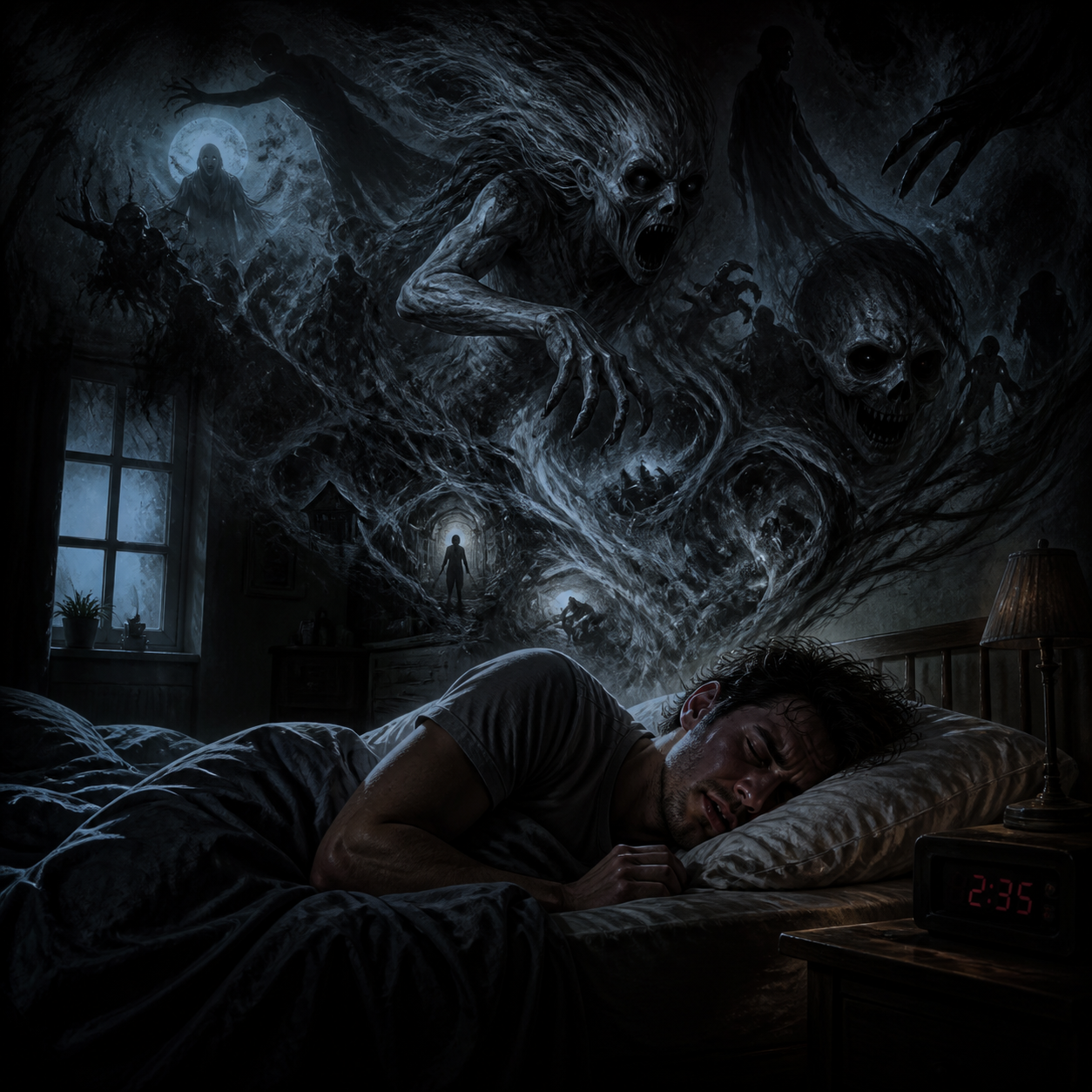
You wake up at 3 a.m., heart pounding, the remnants of a terrifying dream still clinging to you like smoke. It felt real — too real. Whether it happens once a month or every night, nightmares have a way of unsettling us long after we've opened our eyes. Understanding what they are, why they happen, and what they're trying to communicate can transform a frightening experience into something genuinely meaningful.
What Are Nightmares?
Nightmares are vivid, distressing dreams that typically wake the sleeper, leaving behind feelings of fear, dread, or intense anxiety. They differ from ordinary bad dreams in one key way: they interrupt sleep. A bad dream might be unpleasant, but you sleep through it. A nightmare pulls you out of rest entirely.
These experiences almost always occur during REM sleep (Rapid Eye Movement) — the stage of sleep when brain activity surges, the eyes move rapidly beneath closed lids, and dreaming is most intense. REM cycles lengthen as the night progresses, which is why nightmares tend to strike in the early morning hours rather than right after you fall asleep.
During REM, the brain's emotional processing centers are highly active while the prefrontal cortex — the rational, decision-making part — is largely offline. This combination creates the perfect conditions for emotionally charged, sometimes terrifying dream experiences that feel completely real in the moment.
Common Causes of Nightmares
Nightmares rarely appear without reason. In most cases, something in your waking life — or in your body — is driving them.
Stress and anxiety are the most frequent culprits. When the mind is overwhelmed during the day, it doesn't simply switch off at night. The subconscious mind continues processing unresolved tension, and that processing can manifest as threatening dream scenarios.
Trauma plays a significant role as well. People living with post-traumatic stress disorder (PTSD) often experience nightmares that replay or symbolically represent traumatic events. For them, nightmares aren't random — they're the mind's persistent, often unsuccessful attempt to integrate overwhelming experiences.
Other common triggers include:
- Certain medications, particularly antidepressants, beta-blockers, and drugs that affect neurotransmitters
- Irregular sleep schedules that disrupt normal REM cycles
- Heavy meals, alcohol, or spicy foods consumed close to bedtime
- Exposure to disturbing media — violent films, distressing news — in the hours before sleep
- Fever or illness, which can intensify dream vividness
Sleep deprivation creates its own feedback loop: the more sleep you miss, the more intense REM rebound becomes when you finally do sleep, which increases nightmare frequency.
What Your Nightmares May Be Telling You
From a dream interpretation perspective, nightmares are rarely just noise — they carry messages from the subconscious mind about fears, conflicts, and emotions that haven't been fully processed in waking life.
The subconscious communicates through dream symbolism, using images and scenarios as a kind of compressed emotional language. A nightmare about being trapped in a burning building might not be about fire at all — it could represent feeling suffocated in a relationship or career. A dream about being chased might reflect avoidance of a difficult situation rather than any literal threat.

This symbolic layer is why nightmares deserve attention rather than dismissal. When you wake from a disturbing dream, the emotional residue — the fear, the helplessness, the grief — is real, even if the images were not. Those emotions are pointing somewhere. Journaling immediately after waking, before the details fade, can help you identify patterns and begin to decode what your mind is working through.
The intersection of psychology and symbolism is where nightmare interpretation becomes genuinely useful: not as fortune-telling, but as a mirror held up to your inner emotional landscape.
Recurring Nightmares: Patterns and Meaning
A nightmare that returns night after night is the subconscious mind's way of insisting you pay attention to something you haven't yet resolved.
Recurring nightmares share certain universal themes across cultures and individuals. Being chased is perhaps the most common — typically linked to avoidance, whether of a person, a decision, or an emotion. Falling dreams often surface during periods of instability or loss of control. Dreams about losing teeth are frequently associated with anxiety around appearance, communication, or fear of loss. Being unprepared for an exam — even decades after leaving school — tends to reflect performance anxiety or imposter syndrome in current life circumstances.
The repetition itself is significant. When a nightmare recurs, it suggests that the underlying emotional issue hasn't shifted. The dream keeps returning because the waking-life trigger — the unresolved conflict, the suppressed grief, the ongoing stress — is still present.
Tracking recurring nightmares in a dream journal, noting both the imagery and your emotional state in the days before they appear, often reveals a clear pattern. That pattern is the starting point for meaningful change.
When Nightmares Become a Disorder
Nightmare disorder is diagnosed when nightmares are frequent, severe, and significantly impair daily functioning — causing distress, sleep avoidance, or daytime fatigue that affects work and relationships. This is distinct from the occasional bad dream that everyone experiences.
The condition has strong ties to PTSD, where nightmares are often a core symptom rather than a side effect. It also overlaps with sleep paralysis — a phenomenon where the body remains temporarily immobile upon waking from REM sleep, sometimes accompanied by hallucinations that can feel like a continuation of the nightmare. Sleep paralysis is not dangerous, but it can be profoundly frightening.
Other mental health conditions — depression, anxiety disorders, and borderline personality disorder — are also associated with elevated nightmare frequency. If nightmares are disrupting your sleep most nights, causing you to dread going to bed, or if they're clearly connected to a traumatic experience, speaking with a mental health professional is a reasonable and important step. This article can inform, but it cannot replace that conversation.
Practical Techniques to Overcome Nightmares
There are several evidence-informed and practically tested approaches that can reduce nightmare frequency and intensity — some address the body, some the mind, and some work directly with the dream content itself.
Sleep Hygiene as a Foundation
Improving sleep hygiene is the baseline. Consistent sleep and wake times stabilize REM cycles, reducing the intensity of dream experiences. Avoiding alcohol, heavy meals, and stimulating media in the two hours before bed removes common nightmare triggers. A cool, dark, quiet sleep environment signals safety to the nervous system.
Relaxation and Emotional Processing
A wind-down routine that includes progressive muscle relaxation, slow breathing, or meditation helps lower cortisol levels before sleep. When the nervous system enters rest in a calmer state, the emotional charge available to fuel nightmares is reduced. Journaling about the day's stressors — getting them out of the mind and onto paper — is a simple habit with a real effect on dream content.
Image Rehearsal Therapy
Image Rehearsal Therapy (IRT) is one of the most well-supported psychological techniques for recurring nightmares, particularly those linked to PTSD. The approach involves writing down a recurring nightmare, then consciously rewriting the ending while awake — changing the narrative to something less threatening or even positive. You then rehearse this new version in your mind repeatedly during the day.
The logic is straightforward: the brain doesn't sharply distinguish between vividly imagined scenarios and real ones. By rehearsing a new outcome while awake, you begin to shift the neural pathways that generate the nightmare, giving the sleeping mind a different script to follow.
Lucid Dreaming as a Tool
Lucid dreaming — the ability to become aware that you're dreaming while still inside the dream — offers another avenue for those willing to develop the skill. Once lucid within a nightmare, many people find they can alter the scenario, confront threatening figures, or simply choose to wake up. Techniques like reality testing during the day (asking yourself "am I dreaming?" repeatedly) and the MILD method (Mnemonic Induction of Lucid Dreams) can gradually increase lucid dream frequency.
It takes practice, and it won't work for everyone, but for some people it becomes a genuinely transformative way to reclaim agency within their own dream life.
Building a Healthier Dream Life
Overcoming nightmares isn't just about stopping something bad — it's about creating conditions where the dreaming mind can do its best work: processing emotion, consolidating memory, and occasionally offering insight that waking life doesn't easily provide.
Long-term habits that support positive dreaming include maintaining consistent sleep, managing daytime stress through exercise and connection, and developing a genuine curiosity about your dream life rather than fearing it. Keeping a dream journal — even on non-nightmare nights — builds a richer relationship with your subconscious mind over time.
Dreams, including difficult ones, are part of how the mind takes care of itself. When you understand that, nightmares shift from something that happens to you into something you can work with.
Frequently Asked Questions
What is the most common cause of nightmares in adults?
Stress and anxiety are the leading causes of nightmares in adults. Unresolved emotional tension from daily life continues to be processed during REM sleep, often surfacing as threatening or distressing dream scenarios.
Can nightmares be a sign of something serious?
Occasional nightmares are normal and not a cause for concern. However, frequent, severe nightmares — especially those connected to trauma or that significantly disrupt sleep and daily functioning — may indicate nightmare disorder, PTSD, or another mental health condition that warrants professional attention.
How does Image Rehearsal Therapy work for nightmares?
IRT involves writing down a recurring nightmare, consciously rewriting it with a less distressing ending, and mentally rehearsing the new version while awake. Over time, this process can reprogram the dream narrative the sleeping brain generates, reducing the frequency and intensity of the original nightmare.
Why do I keep having the same nightmare over and over?
Recurring nightmares typically signal an unresolved emotional issue — a fear, conflict, or stressor that hasn't been adequately processed in waking life. The dream repeats because the underlying trigger remains active. Identifying and addressing that trigger, through journaling, therapy, or lifestyle change, usually reduces recurrence.
Can lucid dreaming help stop nightmares?
Yes, for many people. Becoming aware within a nightmare that you are dreaming allows you to alter the scenario, face threatening elements, or wake yourself up intentionally. Lucid dreaming requires practice to develop but can be a powerful tool for those who experience chronic or distressing nightmares. Techniques like reality testing and the MILD method are common starting points.