Dream Interpretation in Psychology: Freud vs. Jung
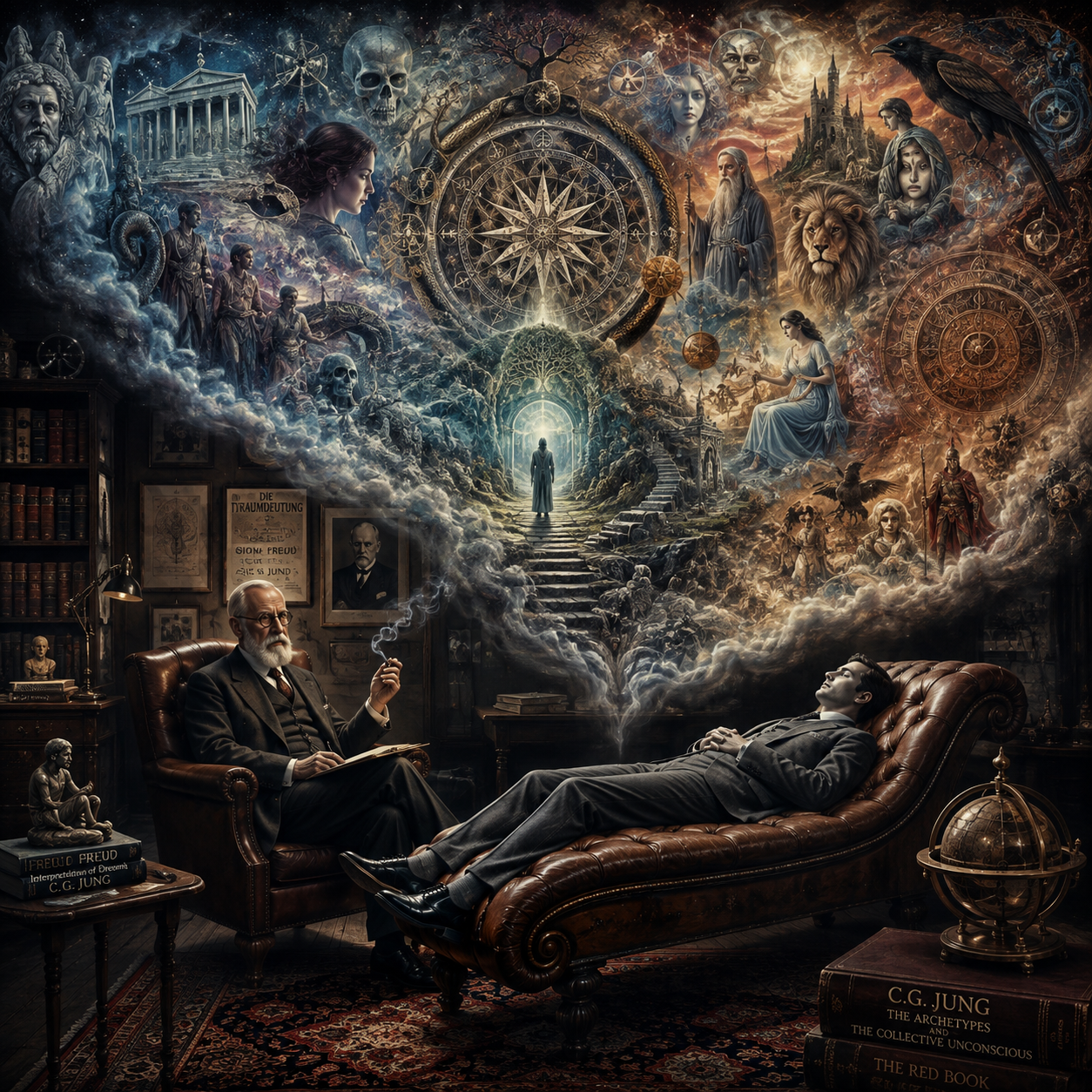
Dreams have long interested psychology because they can combine intense emotion, unusual images, memories, and apparently unrelated events. Sigmund Freud and Carl Jung both regarded dreams as meaningful expressions of the unconscious mind, yet they explained that meaning in very different ways.
Freud emphasized repression, conflict, and wish fulfillment. Jung viewed dreams as messages that could promote balance, self-knowledge, and individuation. Neither approach provides a guaranteed dictionary for decoding symbols. Instead, each offers a distinct lens for asking what a dream may reveal about a person’s inner life.
Why Dreams Matter in Psychology
Dreams matter in psychology because they may reveal emotional concerns, conflicts, memories, and patterns outside ordinary conscious awareness. Freud and Jung treated dream interpretation as a way to explore the relationship between conscious experience and the unconscious mind.
During sleep, the mind can produce narratives that feel vivid but resist literal explanation. A dream about falling, being chased, losing a train, or meeting an unfamiliar figure may reflect recent stress, older memories, imaginative processing, or several influences at once. Psychological interpretation therefore begins with context rather than assuming that one image has one fixed meaning.
For both Freud and Jung, the dream became important because it could express material that a person did not fully recognize while awake. Their shared starting point was the unconscious, but their destinations differed:
- Freud looked for hidden wishes, repressed impulses, and unresolved psychological conflict.
- Jung looked for compensating insights, symbolic patterns, and movement toward a more integrated personality.
Dream interpretation was central to Freud’s psychoanalysis, while Jung expanded the subject into analytical psychology. You can explore the historical background of psychoanalytic thought through the Encyclopaedia Britannica overview of psychoanalysis, while remembering that historical influence is not the same as modern scientific confirmation.
Freud’s Theory of Dreams
Freud’s theory of dreams presents them primarily as disguised expressions of repressed wishes and psychological conflict. In his model, the remembered dream is the surface form, while its hidden meaning may involve forbidden desires, anxiety, memories, or unresolved relationships.
Freud distinguished between manifest content and latent content. Manifest content refers to the storyline and images a person remembers after waking. Latent content refers to the concealed thoughts and wishes that the dream supposedly transforms into that storyline.
Freud believed the mind’s defenses helped shape this transformation. A wish or impulse considered unacceptable by the conscious personality might appear indirectly through displacement, condensation, symbolism, or changes in the dream’s narrative. The result could be confusing or emotionally exaggerated.
Wish fulfillment and repression
Wish fulfillment was a central idea in Freud’s dream theory. He proposed that dreams could satisfy wishes symbolically, including wishes that the dreamer would not openly acknowledge. However, this does not mean every dream looks pleasant or obviously gratifying. Anxiety dreams, nightmares, and repetitive dreams could involve conflict between an impulse and the mind’s attempt to defend against it.
For example, dreaming about missing an important examination might express more than fear of failure. A Freudian analyst could ask whether the dream also conceals a wish to escape expectations, avoid responsibility, or receive care after feeling overwhelmed.
Freud’s method often used free association. Rather than consulting a universal symbol list, the dreamer would describe spontaneous thoughts connected with each image. A locked door might mean secrecy for one person, a childhood home for another, and a recent argument for someone else. The interpretation depended on personal associations, biography, and emotional conflict.
Jung’s Theory of Dreams
Jung’s theory of dreams views them as communications from the unconscious that can compensate for one-sided conscious attitudes and support psychological growth. Dreams may expose neglected feelings, present alternative perspectives, and contribute to individuation, the gradual development of a more whole and integrated self.
Jung accepted that dreams could contain personal memories and conflicts, but he rejected the idea that wish fulfillment explained all dream activity. He often described dreams as relatively direct expressions of unconscious life, although their symbolic language still required interpretation.
Personal symbols and archetypes
Jungian dream interpretation considers both personal symbolism and archetypes. A personal symbol develops from an individual’s experiences. A river might remind one dreamer of childhood vacations and another of danger. Archetypal imagery refers to recurring patterns that appear across myths, religions, stories, and human imagination, such as the shadow, the wise guide, the child, the mother, or the journey.
Jung connected these patterns with the collective unconscious, a proposed layer of the psyche containing inherited structures that shape how humans organize experience. The collective unconscious is one of Jung’s most distinctive and controversial concepts. It should be treated as a theoretical model, not a scientifically established storage system for shared dream symbols.
Jung also used the idea of compensation. If a person consciously presents as completely self-sufficient, a dream may feature dependence, vulnerability, or a need for help. The dream is not necessarily predicting an event. It may be highlighting an attitude that conscious life has ignored.
In this framework, interpretation asks: What is the dream trying to balance? Which part of the personality is absent from waking life? How might the dream relate to the person’s current stage of development?
Freud vs. Jung: Key Differences
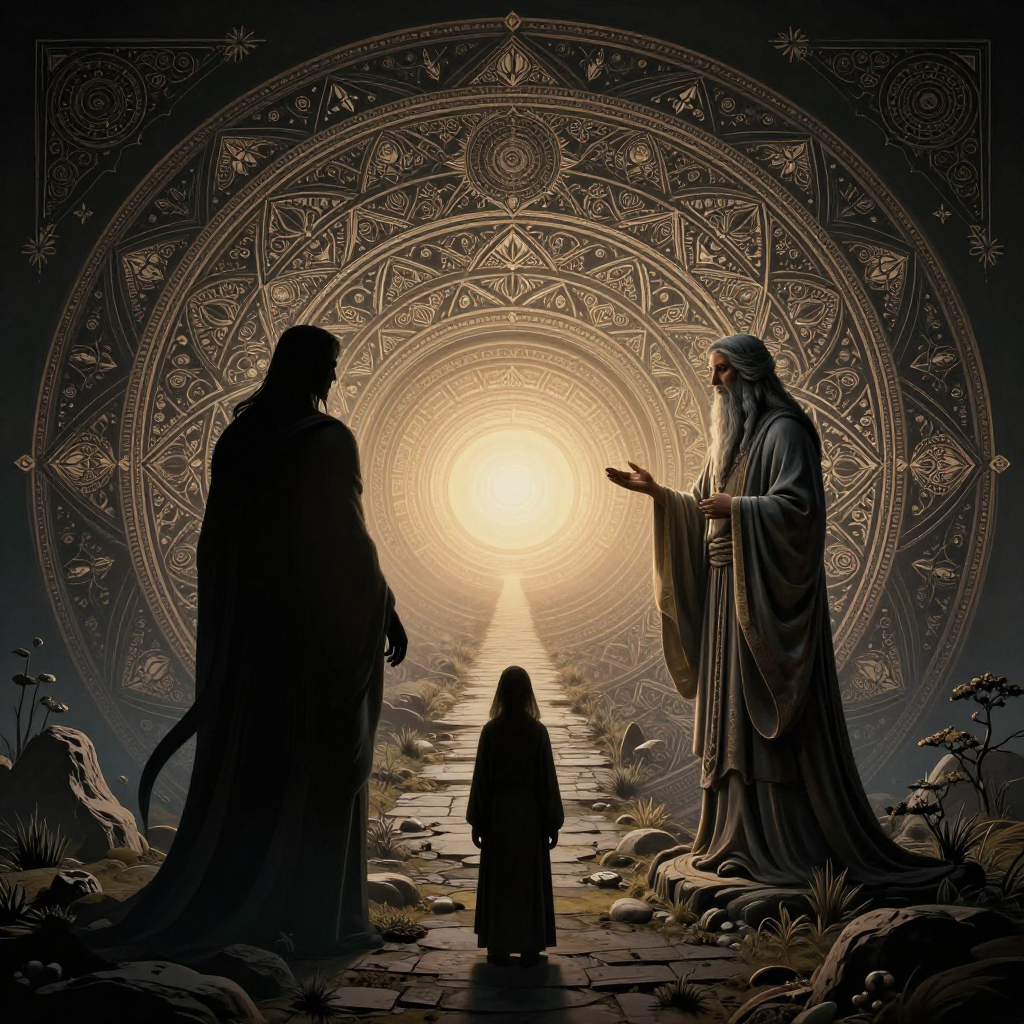
The main difference between Freud and Jung is that Freud emphasized repressed wishes and personal conflict, while Jung emphasized symbolic compensation, archetypes, and psychological integration. Both valued the unconscious, but they assigned it different functions and meanings.
| Question | Freudian perspective | Jungian perspective |
|---|---|---|
| What is the unconscious? | A domain containing repressed wishes, impulses, memories, and conflicts. | A broader psychic layer containing personal material and archetypal patterns. |
| What do dreams do? | Disguise and express wishes while managing inner conflict. | Compensate for conscious imbalance and support self-understanding. |
| How does symbolism work? | Symbols may disguise latent content, often shaped by personal history. | Symbols can express personal meaning and archetypal possibilities at the same time. |
| What role does sexuality play? | Sexual and aggressive drives are important sources of conflict and dream content. | Sexuality matters, but dreams cannot be reduced to sexual wishes. |
| What is the goal? | Make repressed material more conscious through analysis. | Integrate divided aspects of the personality through individuation. |
Freud generally moved from the dream image toward hidden personal content. Jung allowed the image to retain more of its symbolic richness. A snake, for instance, might represent a repressed impulse in a Freudian reading, whereas a Jungian interpretation could also explore transformation, instinct, danger, healing, or the dreamer’s relationship with change.
These differences reflect two contrasting assumptions. Freud tended to ask what the dream conceals. Jung more often asked what the dream reveals or develops. In practice, thoughtful interpretation may ask both questions.
How Freud and Jung Might Interpret the Same Dream
The same dream can receive different interpretations because Freud and Jung focus on different psychological functions. A Freudian reading usually searches for disguised conflict and wish fulfillment, while a Jungian reading considers compensation, symbolic development, and individuation.
Illustrative example: the locked house
Dream: A person walks through an unfamiliar house at night. Several rooms are locked. In the final room, the dreamer finds a frightened child and wakes feeling both anxious and protective.
Freudian interpretation: The house might represent the dreamer’s psychic life, while the locked rooms conceal repressed memories, wishes, or conflicts. The child could connect with a vulnerable childhood experience or a forbidden wish for care. A psychoanalytic exploration would examine the dreamer’s free associations: What does the house resemble? Who is the child? What recent situation has created similar anxiety or longing?
Jungian interpretation: The house could symbolize the personality, with its unexplored rooms representing neglected aspects of the self. The child may be an archetypal image of renewal, potential, or emotional authenticity. Finding and protecting the child could suggest that the dreamer is beginning to integrate a vulnerable but valuable part of the personality.
Neither interpretation can be confirmed simply by matching images to a symbol chart. The dreamer’s emotions and circumstances decide which questions are useful. If the person recently became a parent, the child may carry a concrete personal association. If the person has been suppressing creativity, the child may symbolize a developing project. Several meanings can coexist.
Strengths and Limitations of Both Approaches
Freudian and Jungian theories remain valuable because they provide structured ways to reflect on dream symbolism, emotion, and unconscious patterns, but neither offers a universally reliable decoding system. Their concepts are historically influential and clinically suggestive, yet many specific claims are difficult to test objectively.
What each approach contributes
- Freud’s strength: He directs attention to conflict, defense, memory, desire, and the ways people may avoid uncomfortable feelings.
- Jung’s strength: He preserves the complexity of images and encourages reflection on growth, identity, neglected qualities, and recurring life themes.
- Shared strength: Both approaches take emotions seriously and discourage purely literal readings of dreams.
The main limitation is interpretive flexibility. A skilled interpreter can often connect the same image to several theories, which makes the result difficult to disprove. Cultural differences also complicate claims about universal symbols. A spider, ocean, wedding, or dead relative may carry radically different meanings depending on family history, religion, media exposure, and current circumstances.
Modern sleep science studies dreaming through neuroscience, memory, emotion, and sleep architecture rather than relying on Freud’s or Jung’s symbolic systems alone. This does not make psychological reflection useless. It means a dream should not be treated as a diagnosis, prophecy, or hidden fact about another person. A recurring nightmare that causes distress may deserve discussion with a qualified mental health professional, but interpretation should never replace appropriate care.
Which Approach Is More Useful for Dream Interpretation Today?
The most useful approach today is usually a flexible combination of personal context, emotional reflection, and cautious use of Freudian and Jungian questions. Freud helps investigate repression and conflict; Jung helps explore symbolism, balance, archetypes, and individuation.
Try a three-part process:
- Describe the experience. Record the dream’s images, emotions, bodily sensations, people, setting, and strongest moment without interpreting it immediately.
- Connect it to waking life. Note recent stress, memories, relationships, decisions, recurring patterns, and emotional reactions. Ask what each image means to you personally.
- Test two lenses. Use Freud’s questions about hidden wishes, defenses, and conflict, then use Jung’s questions about compensation, archetypes, neglected qualities, and growth.
This method avoids two common mistakes: treating a dream as meaningless noise or treating it as a coded message with one correct answer. A practical interpretation should make a plausible connection to the dreamer’s life, acknowledge uncertainty, and generate a useful question rather than a dramatic verdict.
Freud and Jung ultimately offer different maps of the same difficult territory. Their theories can deepen reflection when used as interpretive tools, provided the dreamer remains the primary source of meaning and the limits of the theories stay visible.
Frequently Asked Questions
What is the main difference between Freud’s and Jung’s dream theories?
Freud viewed dreams mainly as disguised expressions of repressed wishes and conflicts. Jung viewed them as symbolic communications that can compensate for conscious imbalance and support individuation.
Did Freud believe every dream represented a hidden wish?
Freud placed wish fulfillment at the center of dream theory, but dreams could also involve anxiety, defense, memory, and conflict. A disturbing dream did not necessarily appear pleasant on the surface.
What are archetypes in Jungian dream interpretation?
Archetypes are recurring symbolic patterns, such as the shadow, wise guide, mother, child, or journey. Jung associated them with the collective unconscious, although this concept remains theoretical rather than scientifically proven.
Can one dream have both Freudian and Jungian meanings?
Yes. One dream may reflect personal conflict and also highlight a neglected quality or developmental task. The two frameworks ask different questions, so their insights can sometimes complement each other.
Are Freud’s and Jung’s dream theories scientifically proven?
No. They are influential psychological theories and interpretive frameworks, but their symbolic claims are not established as universal scientific facts. Dream meaning remains subjective and strongly dependent on personal context.